
Memory helps us store, retain, and recall information needed for daily life. When this ability becomes impaired, it can interfere with work, relationships, and independence. Short Term Memory Loss refers to difficulty remembering recent events, conversations, or newly learned information while older memories may remain intact.
Occasional forgetfulness is common, but persistent Short Term Memory Loss may signal an underlying medical or neurological condition. At DSK Multi-speciality Hospitals, early diagnosis, cognitive assessment, and advanced neurological evaluation help patients identify the root cause and receive timely treatment. Understanding the early warning signs can prevent progression and improve long-term brain health.
What are the First Signs of Memory Loss?
Early indicators of Short Term Memory Loss are often subtle and may be dismissed as stress or fatigue. However, consistent patterns should not be ignored.
Common early signs include:
- Frequently forgetting recent conversations
- Misplacing everyday objects
- Repeating the same questions
- Difficulty recalling appointments
- Trouble following instructions
These early Memory loss symptoms should be medically evaluated if they occur repeatedly. Identifying the Reasons of memory loss early improves treatment outcomes.
Memory Loss Symptoms
When Short Term Memory Loss progresses, symptoms may become more noticeable.
Typical Memory loss symptoms include:
- Forgetting names of people recently met
- Difficulty remembering recent events
- Trouble concentrating
- Confusion in familiar places
- Struggling with decision-making
- Losing track of time
While occasional lapses are normal, persistent symptoms may indicate neurological disorders. Differentiating between normal aging and concerning Short Term Memory Loss requires clinical assessment.
Causes of Memory Loss
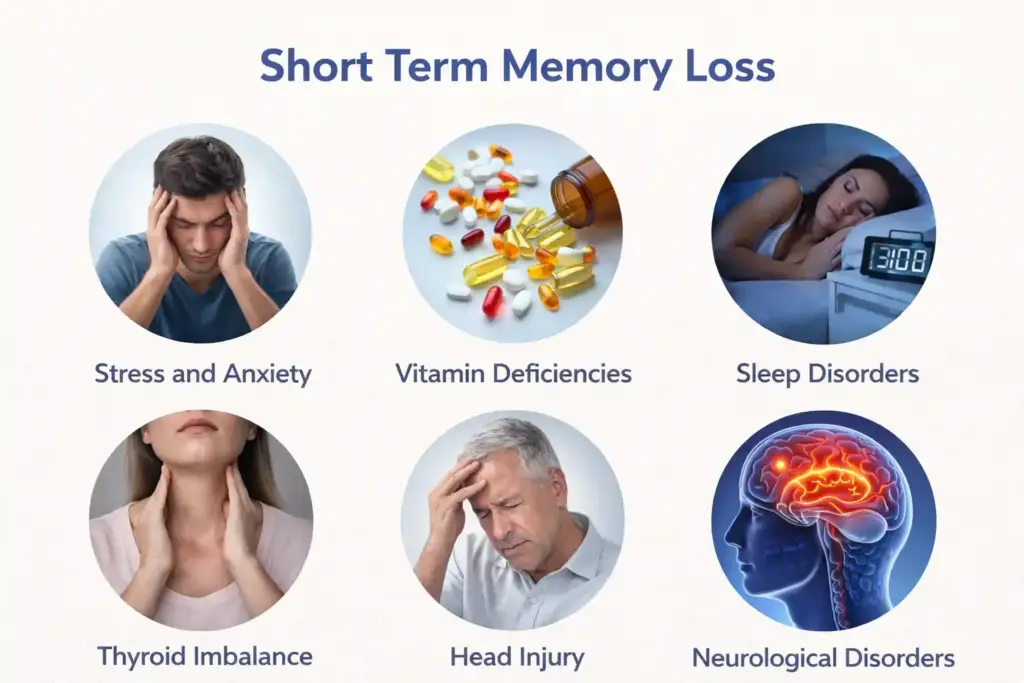
There are several Reasons of memory loss, ranging from temporary conditions to serious neurological diseases.
Common causes include:
Stress and Anxiety
Chronic stress disrupts concentration and recall ability.
Vitamin Deficiencies
Low Vitamin B12 can affect nerve function.
Sleep Disorders
Poor sleep impacts memory consolidation.
Thyroid Imbalance
Hormonal changes may contribute to cognitive decline.
Head Injury
Trauma can damage memory centers of the brain.
Neurological Disorders
Conditions like Alzheimer’s disease can present as progressive Short Term Memory Loss.
Identifying the exact Reasons of memory loss is essential before initiating treatment.
Reason for Memory Loss at Young Age
Many people assume memory issues only affect older adults, but there are valid reasons for memory loss at young age.
These may include:
- Excessive screen exposure
- Chronic stress and burnout
- Depression
- Substance abuse
- Nutritional deficiencies
- Lack of sleep
- Hormonal imbalances
Modern lifestyle patterns significantly contribute to Short Term Memory Loss among younger individuals. Recognizing the reasons for memory loss at young age allows early intervention and lifestyle correction.
Memory Loss Treatment
Treatment depends on the underlying cause of Short Term Memory Loss.
Medical Management
Correcting vitamin deficiencies, thyroid disorders, or infections can reverse symptoms.
Cognitive Therapy
Brain exercises improve recall and concentration.
Lifestyle Modifications
Regular sleep, balanced nutrition, and stress management enhance cognitive function.
Medications
Certain neurological conditions may require prescription treatment.
Memory Training Programs
Structured programs help strengthen neural pathways.
At DSK Multi-speciality Hospitals, comprehensive neurological evaluation, advanced imaging, and cognitive testing help determine personalized treatment plans for patients experiencing Short Term Memory Loss.
Conclusion
Ignoring persistent forgetfulness can delay necessary medical care. While mild lapses may result from stress or fatigue, ongoing Short Term Memory Loss requires professional evaluation. Early diagnosis improves recovery chances and prevents progression into severe cognitive disorders.
At DSK Multi-speciality Hospitals, multidisciplinary specialists provide accurate diagnosis, advanced neurological assessment, and tailored treatment strategies for individuals experiencing memory concerns. If you or a loved one notices recurring Short Term Memory Loss, seeking timely consultation can protect long-term brain health and overall quality of life.